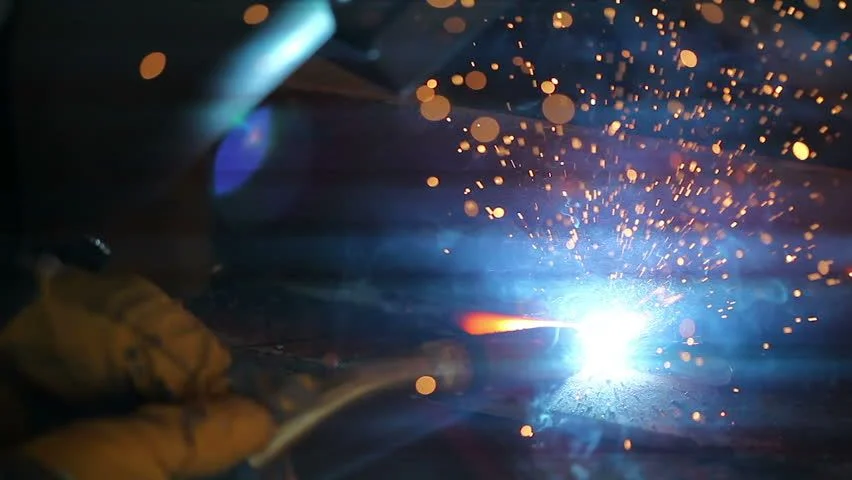

How to Achieve a Mirror Finish on Stainless Steel After Welding Using Electrolyte Weld Cleaning

Achieving a mirror finish on stainless steel after welding is not just about aesthetics—it also improves corrosion resistance and product value. TIG and MIG welding often leave heat tint, discoloration, and surface irregularities that must be properly treated before a high-gloss finish can be achieved. With the right technique, tools, and weld cleaning system, a professional mirror-like finish is easily attainable.
Step 1: Initial Weld Cleaning and Heat Tint Removal
Before polishing begins, the weld area must be thoroughly cleaned. Heat tint and oxidation formed during welding interfere with polishing and can cause uneven results.
Using an electrolyte weld cleaning machine with a suitable brush allows fast and controlled removal of discoloration without grinding or aggressive chemicals. This step restores a uniform surface and prepares the stainless steel for polishing.
For best results:
Use a standard cleaning brush to remove heat tint
Operate at moderate current settings
Maintain steady brush movement for even coverage
Step 2: Surface Preparation for Polishing
Once the weld is clean, surface preparation becomes critical. Any residue, streaks, or contamination left behind will reduce the final shine.
At this stage:
Rinse or wipe the surface clean
Ensure the weld zone is dry and free from contaminants
Inspect the weld for consistency before polishing
A properly prepared surface ensures that the polishing phase produces a smooth, reflective finish rather than dull or patchy areas.
Step 3: Polishing Technique for Stainless Steel Welds
Polishing stainless steel after weld cleaning is a controlled surface-refinement process rather than aggressive material removal. The objective is to smooth microscopic surface irregularities left after heat tint removal and to increase surface reflectivity.
For effective polishing:
Use a medium-density carbon fiber brush designed for polishing rather than heavy oxide removal. Excessively stiff brushes can create drag marks instead of enhancing brightness.
Adjust current gradually, staying within the recommended operating range of the brush. Polishing typically requires slightly higher current than basic cleaning.
Maintain light and consistent pressure. The brush should glide over the surface; forcing the brush reduces finish quality and can overheat the weld zone.
Work in slow, overlapping passes. This ensures uniform current distribution and prevents uneven shine or patchy reflection.
Polish beyond the weld line. Extending the polishing area slightly into the parent material helps blend the weld seamlessly with the surrounding stainless steel surface.
During polishing, the combination of controlled current, brush contact, and electrolyte action smooths the surface at a micro level, allowing light to reflect evenly. This is what produces a bright, mirror-like appearance without grinding or mechanical abrasion.
Proper polishing technique not only improves appearance but also preserves surface integrity, making it suitable for architectural, food-grade, and high-visibility stainless steel applications.
Step 4: Controlled Electrolyte Application
Polishing electrolytes are formulated to enhance brightness and surface clarity. Applied in small amounts, the electrolyte supports smooth surface refinement while preserving stainless steel integrity.
Key tips:
Use minimal electrolyte for better control
Avoid excessive pressure on the brush
Allow the brush to glide naturally over the surface
This controlled process is what gives stainless steel its mirror-like reflective appearance without mechanical abrasion.
Step 5: Final Inspection and Finish
After polishing, inspect the weld under good lighting. A properly polished weld will:
Match the surrounding stainless-steel finish
Show no discoloration or streaks
Reflect light evenly
If needed, a final light pass with a polishing brush can enhance brightness further.
Conclusion
Achieving a mirror finish on stainless steel after welding requires more than just cleaning—it demands the right polishing technique, brush selection, and controlled electrolyte application. Electrolyte weld cleaning systems combined with high-quality dual-layer brushes offer a safe, efficient, and repeatable method for producing premium finishes.
At Jaguar Brushline, we manufacture advanced weld cleaning and polishing brushes engineered to deliver consistent, high-gloss results across all TIG and MIG applications. Whether you’re finishing architectural stainless steel or precision fabrication work, our brushes help you achieve professional mirror finishes with ease.
Visit www.jaguarbrushline.com to explore our complete range of weld cleaning and polishing brush solutions.
Comments